

Such exchanges exclude securities held for dealing and trading activities. Thousands of people have transformed the way they plan unearned revenue their business through our ground-breaking financial forecasting software. Learn how tools like Brixx help accounting firms work smarter, serve clients better, and stay ahead in a fast-changing industry.
- Improving inventory management can get products out of your door faster.
- Positive cash flow means that a business has more money coming in than it is spending, while negative cash flow indicates that a company is spending more money than it is earning.
- Pending payments are not an inflow because no cash has actually entered your business.
- You’re selectively backtracking your income statement in order to eliminate transactions that don’t show the movement of cash.
- A company’s ability to create value for shareholders is determined by its ability to generate positive cash flows.
Are You Paying Too Much For Business Insurance?

Its Cash Management module automates bank integration, global visibility, cash positioning, target balances, and reconciliation—streamlining end-to-end treasury operations. The net cash flow of $23,000 will be referred to as the closing balance for the month of March. However, this same balance will also be referred to as the opening balance for the month of April. Each of these processes highlights how businesses can generate cash, ensuring they have the necessary funds to thrive and expand.
- Although both concepts are important (cash flow vs. profit), you can’t maintain operational efficiency without adequate cash flow.
- While revenues and expenses are recognised at the time the payment is made, profit is recorded on an accrual basis i.e. at the time the transaction occurs, regardless of when payment is made.
- Note that if your business lost money due to an investment, then the investment amount will be written as a negative.
- Regardless of the method, the cash flows from the operating section will give the same result.
- Instead, depreciation reflects the decline in the value of an asset (like a building or machinery) because of age or wear and tear.
- Cash inflows and outflows represent the movement of money into and out of an entity, and properly calculating them is essential for managing expenses, profits, and overall financial planning.
Cash Inflow vs Outflow: What’s the Difference?
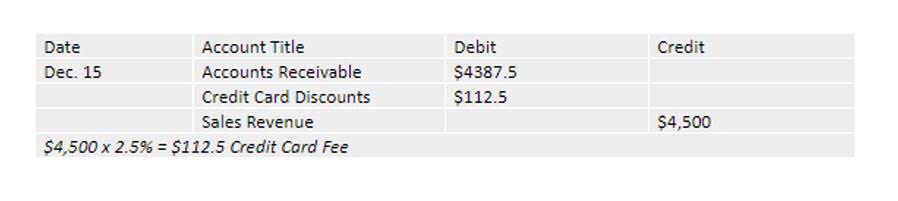
Revenue does not always equal cash inflow, because some customers may pay later or not at all, or some sales may be made on credit. Cash inflows are important for a business because they indicate its liquidity, solvency, and profitability. Monitoring operating cash inflows is essential for financial analysts, as it provides insights into the company’s ability to generate cash from its primary business activities.
Cash inflows
Cash flow from operating activities refers to cash entering or leaving your business as part of your regular business activities, namely the creation and sale of your products and services. Cash inflow and outflow are essential metrics for understanding a business’s financial health, involving money entering and leaving the company. Sales revenue, financing (loans or equity), investment income, and collections from accounts receivable are the primary sources of incoming cash. Cash inflow is the actual cash flow into a business, while revenue includes credit sales, other non-cash transactions, and the cash received. Cash inflow is vital for businesses, determining their financial health and long-term profitability.
- Essential for LiquidityAdequate cash inflows are necessary to cover upcoming cash outflows and maintain the business’s ability to meet its short-term obligations.
- This may help understand the cash flow drivers and identify areas for improvement.
- If they made $2000 in sales and paid $400 in operational costs (like payroll or rent), their operating cash flow would be $1600.
- This document in particular will provide the information you need to help you make better money decisions for your business.
- By automating routine tasks such as bank reconciliation and transaction processing.
A liquid asset is a current asset that you can easily and quickly convert into money. Examples include marketable securities, short-term treasury investments, and goods held for sale. Experts from The Bryn Mawr Trust advise investigating and considering the reasons behind negative cash flows, such as seasonal fluctuations in sales or changes in interest rates. Cash comprises currency, coins, petty cash, checking account balance, savings account balance, money orders, and bank drafts. Cash equivalents refer to securities that can be liquidated within three months. It includes short-term government bonds, marketable securities, treasury bills, commercial papers, money market funds, and other short-term investments.
It makes a business more attractive to investors
Cash inflow represents the influx of funds into your business from diverse avenues. These avenues encompass all income channels, such as revenue from the sale of goods, investments, or financing activities. With your cash flow statement, both your cash inflow and Payroll Taxes outflow will be outlined.
Finally, consider future cash inflows from existing projects as well as future investments when evaluating both the cash flow statement and its corresponding balance sheet. A comprehensive understanding of a firm’s short-term risk exposure will ensure project goals are still achieved while supporting longer-term stability. The first example is a statement that looks at the total cash inflows and outflows over a certain period of time. This type of statement highlights how much money the company has received in comparison to how much it has spent, as well as cash inflow vs outflow any changes between these two figures. Since the income statement and balance sheet are based on accrual accounting, those financials don’t directly measure what happens to cash over a period.
Positive vs Negative Cash Flow
Operating cash flow is money that comes in and out of your business through basic business operations such as creating sales or providing services. Inflow from operating activities is the net income you make from selling your products or service, inventory and accounts receivable. Cash generated from activities of any business or corporation makes up cash inflows.
- Without a steady flow of cash coming in, even the best-laid plans can encounter an obstacle.
- Refer to the illustration below for a better understanding of the flow.
- In contrast, a negative figure indicates that the business has made a payout (such as a dividend payment or debt payment).
- Both profit before tax and profit after income tax (net income) are displayed on financial statements.
- It is the amount of money that is coming in from sales or other sources, compared to how much money is going out for operational costs.
- Negative cash flow occurs when a company’s total expenditures are greater than their total income.
Buying property and equipment may be cheaper in the long run, but it requires more capital upfront. Even if you finance your purchase, many banks and lenders require down payments of 20% to 30%. For example, you need to focus on short-term cash flow as well as long-term. Short-term cash flow reports let you see how you manage your limited runway in real-time. With FP&A software, you can access this information easily on your financial dashboard.
In simple terms, it’s every time you spend money—whether it’s paying salaries, buying materials, or settling bills. Cash flow simply refers to the movement of money in and out of your business (or personal finances) over a specific period. It’s all about tracking how much cash you’re receiving (inflows) and how much you’re spending (outflows).