

IFRS is required for public companies in the majority of major global financial markets. IFRS is more flexible and principles-based, making it easier to achieve global consistency. By eliminating manual effort and reducing audit risk, your finance team can stay audit-ready and focus on high-value strategic activities, rather than drowning in spreadsheets. HighRadius’ AI-powered Record-to-Report solution Foreign Currency Translation is built to streamline and modernize your financial reporting and consolidation processes, ensuring full compliance with both GAAP and IFRS standards.

Key Differences between IFRS vs. US GAAP
Both standards allow the use of First-In, First-Out (FIFO) and weighted-average methods for valuing inventory. However, when it comes to the Last-In, First-Out (LIFO) method, there’s a divergence. LIFO assumes that the last units added to inventory are the first ones sold. This can lead to higher cost of goods sold and lower taxable income during periods of inflation. The difference between the inventory valuation method is important because it directly affects the cost of goods sold on the income statement, influencing a company’s reported earnings. So, businesses that must follow IFRS cannot use LIFO, which means that the profit reporting of inventory will be different.
Understanding GAAP
Regardless of the outcome, the dynamic nature of accounting standards will persist, calling for adaptability, informed choices, and a keen understanding of how GAAP and IFRS impact financial reporting. GAAP (Generally Accepted Accounting Principles) and IFRS (International Financial Reporting Standards) are the crucial accounting standards for financial reporting. These standards provide a structured framework that ensures consistency, comparability, and transparency in financial statements across different entities and industries. Both offer guidance on recognizing, measuring, and disclosing financial transactions, promoting accuracy and reliability. One of the major storylines in global accounting over the last few decades has been the drive toward convergence. The aim is to make accounting standards more similar, enabling easier comparison of financial statements across different countries and improving the comparability of international accounting.

Ethics in Accounting Build A Reputation of Trust & Integrity
Also, the roles of accountants will be transformed, with increased emphasis on data analysis, interpretation, and strategic decision-making. The goal is to provide more informative and useful financial reports to assist investors and stakeholders. US GAAP and IFRS are the two predominant accounting standards used by public companies, but there are differences in https://nhqnh0607.id.vn/2022/09/12/bookkeeper360-reviews-read-customer-service/ financial reporting guidelines to be aware of.
- Under GAAP, development costs are expensed as incurred, with the exception of internally developed software.
- This stark contrast in origin and geographic application underscores the need for businesses operating on a global scale to understand and navigate these diverse accounting standards effectively.
- Numbers may tell the truth, but the editorial framework used to arrange them can shape perception, influence investment, and drive strategic decisions.
- Under GAAP, companies may have industry-specific rules and guidelines to follow, while IFRS has principles that require judgment and interpretation to determine how they are to be applied in a given situation.
- In order to present a fair depiction of the business conducted, publicly-traded companies are required to follow specific accounting guidelines when reporting their performance in financial filings.
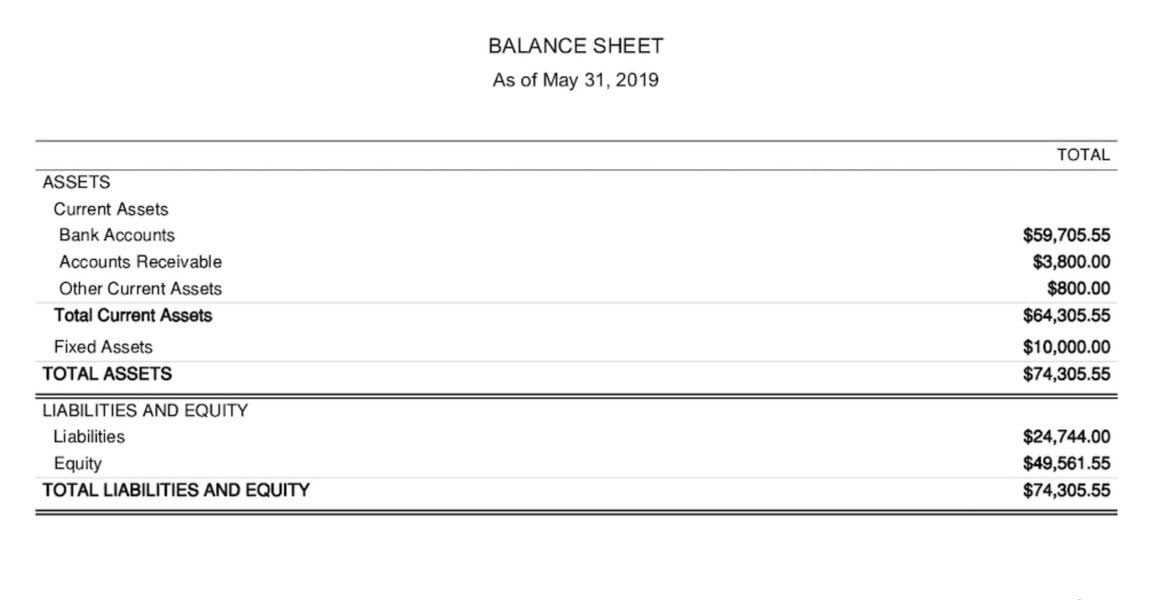
GAAP, crafted by the Financial Accounting Standards Board (FASB) for the Securities and Exchange Commission (SEC) in the US, forms the bedrock of financial reporting for domestic and Canadian publicly traded firms. As a rule-based system, GAAP ensures consistency and transparency in financial statements, aiding investors in assessing data and facilitating informed decision-making. Both the International Accounting Standards Board (IASB) and the US Financial Accounting Standards Board (FASB) are responding to drive clarity. The FASB has also introduced new disclosure requirements to enhance transparency and comparability in the income statement. This edition of IFRS compared to US GAAP includes a new chapter highlighting the key differences related to these requirements. A balance sheet is a financial statement that summarizes a company’s assets, liabilities, and shareholder equity at a given point in time.
- HighRadius leverages advanced AI to detect financial anomalies with over 95% accuracy across $10.3T in annual transactions.
- It’s not just about numbers; it’s about standardizing the narrative framework used to interpret capital market performance.
- Internal costs to create intangible assets, such as development costs, are capitalized under IFRS when certain criteria are met.
- This approach was intentionally chosen to accommodate the diverse legal, cultural, and business environments found across different countries and regions.
These differing approaches can result in different impairment losses being recognized, affecting a company’s balance sheet and income statement. The differences may change the book value of assets, which may have an effect on future profits when they are depreciated. The choice between IFRS and GAAP is a significant decision for multinational corporations, influencing their financial reporting, investment attractiveness, and compliance costs. As the global business environment continues to evolve, the need for a single set of high-quality, globally accepted accounting standards becomes increasingly apparent. Until that goal is achieved, multinational corporations must navigate the complexities of IFRS and GAAP, understanding their differences and implications to ensure accurate and transparent financial reporting.
GAAP doesn’t allow companies to re-evaluate the asset to its original price in these cases. In contrast, IFRS allows some assets to be evaluated up to their original price and adjusted for depreciation. By May 2024, jurisdictions covering more than half of global GDP—including Australia, Brazil, Canada, China, Japan, Mexico, and the UK—had announced plans to adopt or align with these rules. The International Organization of Securities Commissions (IOSCO), whose members regulate 95% of the world’s capital markets, formally endorsed the standards in July 2023 and urged ifrs vs gaap jurisdictions to implement them. For example, one company could book a five-year, $1 million service contract as upfront revenue, while another records the same deal in $200,000 annual chunks. The first company will look much more profitable, even though their cash earnings are identical.
- Both standards allow the use of First-In, First-Out (FIFO) and weighted-average methods for valuing inventory.
- As a rule-based system, GAAP ensures consistency and transparency in financial statements, aiding investors in assessing data and facilitating informed decision-making.
- The geographical scope of mandatory use also highlights the divergence between the frameworks.
- It provides a framework for financial accounting and reporting, ensuring uniformity and compliance with regulatory standards.
- GAAP principles are updated at periodical intervals to meet with current financial requirements.
Deloitte refers to one or more of Deloitte Touche Tohmatsu Limited, a UK private company limited by guarantee (“DTTL”), its network of member firms, and their related entities. DTTL and each of its member firms are legally separate and independent entities. DTTL (also referred to as “Deloitte Global”) does not provide services to clients.